
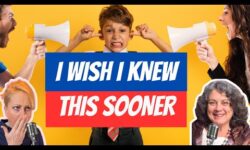
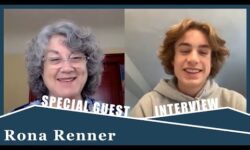
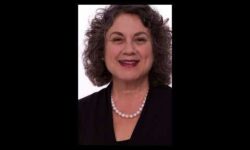
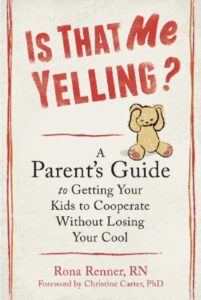
 “Is That Me Yelling? A parents guide to getting your kids to cooperate without losing your cool” was published in 2013 and is available in 5 different languages. It’s a best seller in China, but here in the US you can only get it now on Kindle until the next edition.
If you would like to set up a presentation or training for your child’s preschool or your workplace, you can contact me at .
Is That Me Yelling? is:
“Engaging and practical, humorous and evidence-based, prescriptive but not preachy, authoritative yet never stuffy, Is That Me Yelling? quickly rises to the top of the many parenting books I’ve ever read. Rona Renner provides thoughtful and achievable solutions. If you’re a parent who has ever yelled at your kid and wished you hadn’t, this book is for you.”
—Stephen P. Hinshaw, PhD, professor in the department of psychology at the University of California, Berkeley; and vice-chair of psychology at the University of California, S.F.
“Is That Me Yelling? is a complete and compassionate companion for every parent and educator. With excellent examples from her extensive professional and personal experience, nurse Rona illustrates fundamental psychological principles and functional parenting practices with empathy and enthusiasm.”
—Marisol Muñoz-Kiehne, PhD, clinical psychologist, parent educator, radio host, and author.
Health Consequences of Intimate Partner Violence
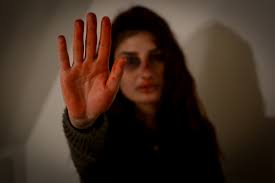
Intimate partner violence (IPV) is violence or aggression that occurs in a close relationship and affects millions of people in the US each year.
Have you experienced Intimate partner violence (IPV)? If so you are not alone! About 1 in 4 women and nearly 1 in 10 men have experienced contact sexual violence, physical violence, and or stalking, by an intimate partner during their lifetime, and reported some form of IPV-related impact. (Center for Disease Control and Prevention)
Listen now to the 7/15/19 show on About Health on KPFA.org, 94.1FM, to learn more about IPV and who is most at risk. There is help out there for you or a loved one.
https://kpfa.org/player/?audio=314353
You deserve to be safe!
 Guests:
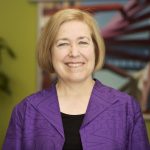
Brigid McCaw, MD, MS, MPH, FACP was the Medical Director of the nationally recognized Family Violence Prevention Program at Kaiser Permanente, Northern California from 2001 until retiring from KP April 2019. She has conducted research and published on developing a healthcare response to family violence; the physical and mental health effects of intimate partner violence; and adverse childhood experiences (ACE’s) and trauma and resiliency informed care. Dr. McCaw received her MD and MS from the UC Berkeley-San Francisco Joint Medical Program, and her MPH from UC Berkeley School of Public Health. She completed an internal medicine residency at UC Davis, and was in clinical practiced at the Kaiser Permanente, Richmond Medical Center. She is a Fellow of the American College of Physicians and member of the Forum on Global Violence Prevention, National Academy of Medicine. She has enjoyed living in and raising her family in the SF Bay area.
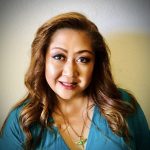 Michiko Scott is an MSW candidate at the School of Social Welfare at UC Berkeley while working as a medical assistant at Kaiser Permanente, Oakland Medical Center. She is also an intimate violence (IPV) survivor who overcame various challenges as an immigrant single mother of five children. In the 1990s, she encountered healthcare professionals who facilitated the process of freeing her from abusive situations. She found the calling to spread awareness of the significant role of the healthcare system in bringing IPV victims and their families to safety and in educating them about adverse health outcomes of IPV. In 2005, Michiko received training as an IPV crisis counselor and a public speaker at Stand! Against Domestic Violence, in Contra Costa County. When she worked at the women’s health clinic at Kaiser Richmond, she joined the Family Violence Prevention Program committee. For an undergraduate honor’s thesis, she researched traumatic brain injury in IPV survivors. Michiko is passionate about inspiring IPV victims and survivors to transform their lives by sharing her lived experience of finding healing and her life’s purpose.
Resources:
https://www.thehotline.org/
24 hour: 1-800-799 SAFE (7233)
https://centerfordomesticpeace.org/
English: 415.924.6616 / Linea de apoyo en español: 415.924.3456 / ManKind: 415.924.1070
Marin Youth Services: 415.526.2557 Monday – Friday, 9am-5pm
http://www.standffov.org/emergency-help
24-Hour, Toll-Free Crisis Line: 1-888-215-5555
https://www.myplanapp.org/home
Alameda County Resources: http://www.acphd.org/media/88820/domestic_violence.pdf
https://www.asafeplace.org/crisis-shelter EMERGENCY LINE 510.536.7233 / 510.536 (SAFE)
CDC: www. cdc.gov:
-
https://www.cdc.gov/violenceprevention/intimatepartnerviolence/
-
https://www.cdc.gov/violenceprevention/pdf/ipv-technicalpackages.pdf
-
http://www.thehotline.org/wp-content/uploads/sites/3/2016/06/TAC-Power-and-Control-Wheel.pdf Check out this POWER WHEEL to learn more about intimate partner violence and emotional abuse.
Safety Alert: Computer use can be monitored and is impossible to completely clear. If you are afraid your internet usage might be monitored, call the National Domestic Violence Hotline at 1−800−799−7233 or TTY 1−800−787−3224. Users of web browser Microsoft Edge will be redirected to Google when clicking the “X” or “Escape” button.
Community Health Access at Street Level Health Project
Listen now to the 7/1/19 show on About Health, KPFA.org (94.1FM), on the needs of vulnerable, underinsured, uninsured, refugee, and immigrant people seeking community medical care.
https://kpfa.org/player/?audio=313587
We discussed the special needs of communities to reduce the incidence of preventable malnutrition and chronic illness. 
Since 2002, Street Level Health has responded to the needs of a community who is 93% foreign-born with almost half (43%) having resided in the U.S. for less than three years.
Guests
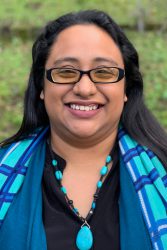 Gabriela Galicia is currently serving as the Executive Director at Street Level Health Project in Oakland, California. She grew up in Southern California the daughter of immigrant parents, in a predominantly Latino low income, low resourced, immigrant and people of color community. Gabriela is the first of her family to graduate from college, and graduated from the University of California, Berkeley in December 2009 with a Bachelor’s Degree in Political Science and a minor in Ethnic Studies with a concentration in Chicano Studies. During her time in college she continued to find her passion in community organizing and working to advocate for issues such as immigrant and workers’ rights at both the local and state level, and other issues and policies affecting the most vulnerable.
Since 2010, she has worked in different capacities and roles at Street Level Health Project. Prior to her role as Executive Director, she served as the Immigrant Rights and Empowerment Program Manager for 6 years, leading and developing the street outreach program, fostering relationships with the Oakland Day Laborers through growing and evolving community building activities. She pioneered and developed the now-established Oakland Workers’ Collective (day laborer program) that creates a safe and empowering space for day laborers and low wage workers. Gabriela strives to continue to build a safe haven for the most vulnerable, elevating their voices and developing programming which places these impacted communities in a position where they can participate with efficacy and power. Recently, she has had the honor to have been selected as one of 18 women to participate in the first cohort of the Leaderspring Women of Color 2020 fellowship program. The purpose of the Women of Color LeadStrong Fellowship is to elevate and strengthen the vision, voice, power, and leadership of women of color working for social and racial equity and justice in the social sector.
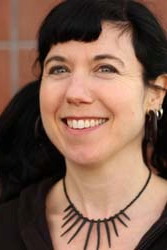
Michelle Grace Steinberg is a nutritionist, herbalist, and documentary filmmaker based in Oakland, CA. She has a B.A. in Cultural Anthropology and a Master’s of Science in Human Nutrition. She completed a 3-year clinical training program at the Ohlone Center for Herbal Studies. In 2009, she started Consultas Naturistas, a free Spanish bilingual holistic nutrition and herbal medicine program at Street Level Health Project. The program serves low income, uninsured clients with consultations on holistic nutrition and wellness, and provides free herbal teas, tinctures, and supplements. Michelle received the American Herbalist Guild 2015 award for Diversity, Equity, and Inclusion and she has contributed articles to several health care journals. She is a board member for Integrative Medicine for the Underserved. (www.im4us.org) Her latest film, BEYOND RECOGNITION was in film festivals and is currently on national public television and her current film, A PLACE TO BREATHE, explores immigrant and refugee experiences in the health care system, highlighting how communities use integrative practices to heal from trauma. www.underexposedfilms.
Trauma And Healing In Communities
How does a community heal from trauma, racism, and violence? And how can youth be an important part of the changes that are needed for healing, health, and hope!
Listen now to the show on 6/24/19 on About Health—KPFA.org 94.1FM, for a continuing look at social determinants of health:https://kpfa.org/player/?audio=313121
Youth who live with community violence experience heightened fear that they could be a target and that the world is an unsafe place. There are communities around the country that are notorious for homicides, and gang violence—places that are too dangerous for children to play outside, and for teens to feel respected and safe. Living in fear takes a toll on a person’s mental health, and ongoing stress can have serious physical consequences as well. Community violence and racism makes it much harder to live a healthy life! We will discuss what communities are doing to give teens a voice, agency, heal, and become change agents.
“West Contra Costa youth bear the burden of multiple health and social inequities. There is a harmful public narrative, promoted in both policies and the media, that youth of color are deficits, not assets, to the larger community.”
“Programming at RYSE is anchored in the belief that young people have the lived knowledge and expertise to identify, prioritize, and direct the activities and services necessary to thrive.”
 —RYSE Center https://rysecenter.org/
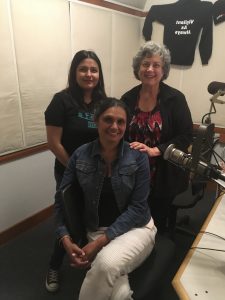
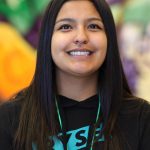
Dalia J. Ramos-Mucino has been the RYSE Member Engagement Coordinator since 2017. As Member Engagement Coordinator, Dalia is responsible for holding a friendly and positive culture within the space and with the youth. Dalia is passionate about creative expression in different forms like dancing, poetry, and storytelling. She will always work to ensure that RYSE is a safe, welcoming, and fun environment where youth feel open to express their thoughts and feelings. Before joining the RYSE staff, Dalia attended RYSE as a 14-year-old member and at 16 became an intern on the RYSE Leadership Team. She has been trained in Non-Violent Communication, Restorative Justice, and more.
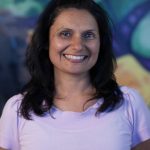
Kanwarpal Dhaliwal is one of the co-founders of RYSE and as the Associate Director, she supports and guides the implementation and integration of healing-centered practices, grounded in racial justice and liberation, across all of RYSE’s program areas. She also develops, promotes, and advocates for policies, investments, practices, and research that enliven healing, justice, and liberation across the fields and sectors in which RYSE works. Kanwarpal believes that the purpose of her work and life is to contribute to movements, communities, and legacies of liberation that honor the ancestors who fought for her existence and survival, and to forge a world that is just and gentle for future generations. Before joining RYSE, Kanwarpal received a Master’s Degree in Public Health, and now serves as adjunct faculty at San Francisco State University.
Responding to Emergencies
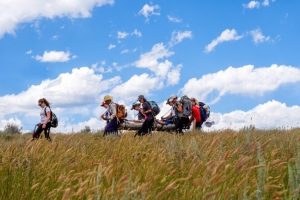
Listen here to the 6/3/19 show on KPFA.org 94.1FM on About Health
https://kpfa.org/player/?audio=311944
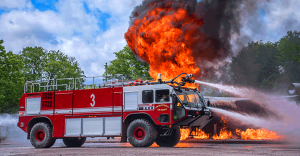
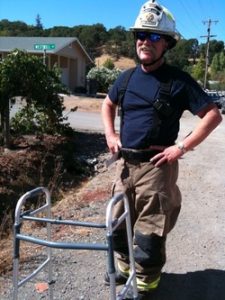
Emergencies require leadership and a plan, but if we are not prepared there can be chaos and precious time wasted to help the injured. Join us to discuss how to respond to emergencies and bring some order to tense situations. Call us with your questions on topics such as: CPR, water safety, wound care, traumatic falls, fire prevention, and what to do if there is a fire.
Guest:
 on May 20, 2019 to “About Health”
 arted” families.