by Rona | Jul 29, 2021 | KPFA, Podcasts, Radio Shows
How can we address the ills of people who have been, and continue to be, struggling with the emotional and physical distress in this time of Covid?
There is a shortage of mental health professionals, especially in immigrant communities and communities of color. There is also suspicion of the Covid vaccine, sometimes based on medical racism and mistrust.
Join us to hear of some of the innovative programs that are being developed with community health workers, known as Promotores. The grassroots approach to building community capacity engages Promotores, strengthening their leadership skills as they connect people to needed services, and resources.
**Listen now to the show on August 2, 2021 on KPFA.org radio, 94.1FM**
Guest:
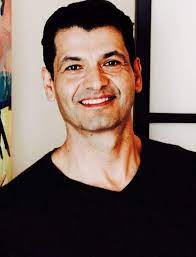
Dr. Jorge Partida PsyD, is a clinical and research psychologist, specializing in addiction and trauma. He is an author, consultant, and national speaker integrating Native Ancestral Teachings with traditional Western psychotherapy. Born in Guadalajara, Jalisco, Mexico, Dr. Partida immigrated to Chicago at nine years of age and there, obtained his Bachelors Degree in Clinical Psychology from Loyola University and his PsyD from The Illinois School of Professional’ Psychology. Dr. Jorge has been a consultant on many national and international projects designing and implementing clinical programs to address addiction, education, health, community building, diversity and spirituality. He has worked with local and national governments to coordinate services for those most impacted by poverty, war, and displacement. He has worked in Liberia, Africa in the repatriation of boy soldiers, forming “intentional communities” in war and poverty-impacted countries such as Colombia, Peru, and Mexico. Dr. Jorge has served as Director of Substance Abuse and Deputy Director of Behavioral Health for San Francisco’s Department of Public Health. He was also Director of the PsyD Program at John F. Kennedy University. Most recently Dr. Jorge served as Clinical Director and Director of Family Treatment for Alo Recovery Centers in Malibu, CA. Dr. Jorge is the author of “The Promise of The Fifth Sun” and “A Week of Awakening.” (Both titles are also written in Spanish) His writing integrates psychology with native healing traditions creating a client centered, participatory approach to health and wellness. For more than 20 years, Dr. Jorge has presented mental health segments on television and radio with networks, including Univision, Telemundo, HITN-TV in Spanish and CBS, UPN, NBC and PBS in English.
by Rona | Jul 8, 2021 | KPFA, Podcasts, Radio Shows
Are you getting the medical care you hoped for? Perhaps you really like your doctor and feel listened to and well treated. Or maybe you’re frustrated with the lack of coordinated medical care, unconscious bias, and medical systems that don’t keep patients well-being at the center of their decisions. Most people agree that the US health care system is broken, but there is also a less talked about problem to address— “physician culture.” My guest, Dr. Robert Pearl, says, “Doctors are not heroes or villains. They produce remarkable successes and abysmal failures.” We’ll discuss what doctors do well, and how some miss the mark on compassionate, science based, high quality, and effective medicine for all.
**Listen now to About Health on KPFA.org—94.1FM, (7/12/21)**
ROBERT PEARL, M.D. is the former CEO of The Permanente Medical Group (1999-2017), the nation’s largest medical group, and former president of The Mid-Atlantic Permanente Medical Group (2009-2017). In these roles he led 10,000 physicians, 38,000 staff and was responsible for the nationally recognized medical care of 5 million Kaiser Permanente members. Named one of Modern Healthcare’s 50 most influential physician leaders, he is an advocate for the power of integrated, prepaid, technologically advanced and physician-led healthcare delivery. He serves as a clinical professor of plastic surgery at Stanford University School of Medicine and is on the faculty of the Stanford Graduate School of Business, where he teaches courses on strategy and leadership, and lectures on information technology and health care policy. Board certified in plastic and reconstructive surgery, Dr. Pearl received his medical degree from the Yale University School of Medicine, followed by a residency in plastic and reconstructive surgery at Stanford University.
Dr. Pearl hosts the podcasts Fixing Healthcare and Coronavirus: The Truth and he publishes a newsletter, Monthly Musings on American Healthcare. He has published more than 100 articles in medical journals and contributed to numerous books. From 2012 to 2017, Dr. Pearl served as chairman of the Council of Accountable Physician Practices (CAPP), which includes the nation’s largest and best multispecialty medical groups, and participated in the Bipartisan Congressional Task Force on Delivery System Reform and Health IT in Washington, D.C. Connect with Dr. Robert Pearl on Twitter @RobertPearlMD, LinkedIn, and at his website robertpearlmd.com.
by Rona | Jun 22, 2021 | KPFA, Podcasts, Radio Shows
Listen now on About Health on KPFA radio— 94.1FM (6/28/21)
Alzheimer’s, which is a neurological disorder, affects 6.2 million Americans. “Worldwide, around 50 million people have dementia, and there are nearly 10 million new cases every year. Alzheimer’s disease is the most common form of dementia and may contribute to 60–70% of cases.” —World Health Organization.
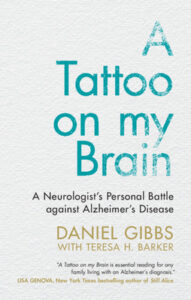
There is no cure for Alzheimer’s, but there is extensive clinical research being done. The pathological changes in a person’s brain start ten to twenty years before there is cognitive impairment…and so it’s vital that life style changes begin before typical symptoms show up. My guest, Dr. Daniel Gibbs, has been devoting his time to raising awareness about early-stage Alzheimer’s, and what people can do about it, in order to live a meaningful life for a longer time.
 Guest
Guest
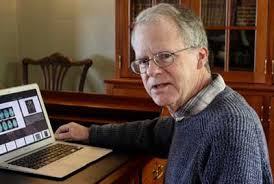
Dr. Daniel Gibbs is a retired neurologist in Portland Oregon, with early-stage Alzheimer’s disease. Having spent twenty-five years caring for patients, many with dementia themselves, he is now an active advocate for the early recognition and management of Alzheimer’s. He is the author, along with Teresa H. Barker, of the recently released book “A Tattoo on my Brain. A Neurologist’s Personal Battle against Alzheimer’s Disease”
by Rona | Apr 12, 2021 | KPFA, Podcasts, Radio Shows
When it comes to parenting approaches, one size does not fit all. There are many factors that influence how you raise your child based on things like temperament, parenting style, culture, and family and social influences. There are many different styles and methods of parenting, and if you get confused about what your child or grandchild needs, you’re not alone.
Listen now to KPFA.org 94.1FM (4/19/21)
My guest on About Health, Dr. David Rettew, will join me to discuss topics such as screen time, eating habits, discipline, and the benefits and challenges of different parenting styles such as “helicopter” versus “old school” parenting. There are a lot of questions facing parents of young children, but understanding more about your child’s temperament and yours will guide you through the different stages of childhood.
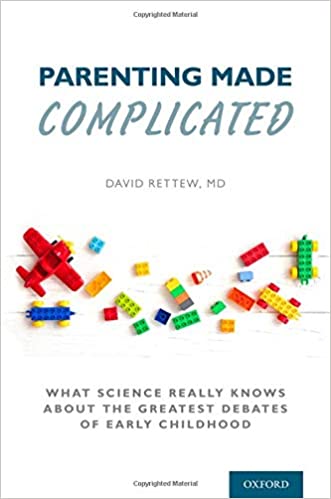
Guest: David Rettew, MD is an Associate Professor of Psychiatry and Pediatrics at the University of Vermont Larner College of Medicine. Dr. Rettew has over 100 published journal articles, chapters, and scientific abstracts on a variety of child mental health topics, including a 2013 book entitled Child Temperament: New Thinking About the Boundary Between Traits and Illness. He also writes a blog for Psychology Today called, “The ABCs of Child Psychiatry.” His newest book is called Parenting Made Complicated: What Science Really Knows about the Greatest Debates of Early Parenting. You can follow him on Twitter and Facebook @PediPsych.
by Rona | Feb 28, 2021 | KPFA, Podcasts, Radio Shows
Many people who are dealing with estrangement in their family don’t talk about it because of shame and fear of judgement. Dealing with estrangement takes an emotional and often physical toll on the people involved. You are not alone! There are things that can sometimes help family members reunite.
Listen now to the show on 3/8/21 on KPFA.org—94.1FM Radio, for an interview with Dr. Joshua Coleman, author of the newly released book, Rules of Estrangement: Why Adult Children Cut Ties and How to Heal the Conflict.
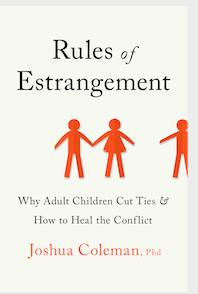
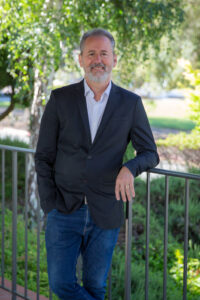 Dr. Joshua Coleman is a psychologist in private practice in the San Francisco Bay Area and a Senior Fellow with the Council on Contemporary Families. He is the co-editor, along with historian Stephanie Coontz of seven online volumes of Unconventional Wisdom: News You Can Use, a compendium of note worthy research on the contemporary family, gender, sexuality, poverty, and work-family issues. His new book, Rules of Estrangement: Why Adult Children Cut Ties and How to Heal the Conflict, was just released by Penguin Random House. He is frequently contacted by the media for opinions and commentary about changes in the American family. He has been a frequent guest on the Today Show, NPR, The BBC, NYU Psychiatry Radio, and has also been featured on Sesame Street, 20/20, Good Morning America, America Online Coaches, PBS, and numerous news programs for television. He has written for the the Atlantic, The New York Times, CNN, NBC, Aeon, Psychology Today, the SF Chronicle and other publications. He is the father of three adult children, has a teenage grandson, and lives with his wife in the San Francisco Bay Area.